How Teachers Calculate Grades (With a Grading Calculator)
Grading papers takes time, and mistakes can easily happen when calculations are done manually. Students question results, parents feel confused, and teachers feel pressure when grades affect academic progress. Even a small error can feel unfair.
That’s why many teachers now use a grading calculator to speed up the process and avoid errors. On our Grading Calculator homepage, teachers can quickly see how teachers calculate grades using clear, standard methods that match real classroom practices.
You can also visit our Grading Calculator to calculate test scores and grades in seconds.
Teachers calculate grades by dividing correct answers by total questions and converting the result into a percentage or letter grade. Many educators use a grading calculator to save time, reduce errors, and apply grading rules consistently across quizzes, tests, and exams.
How Teachers Traditionally Calculate Grades
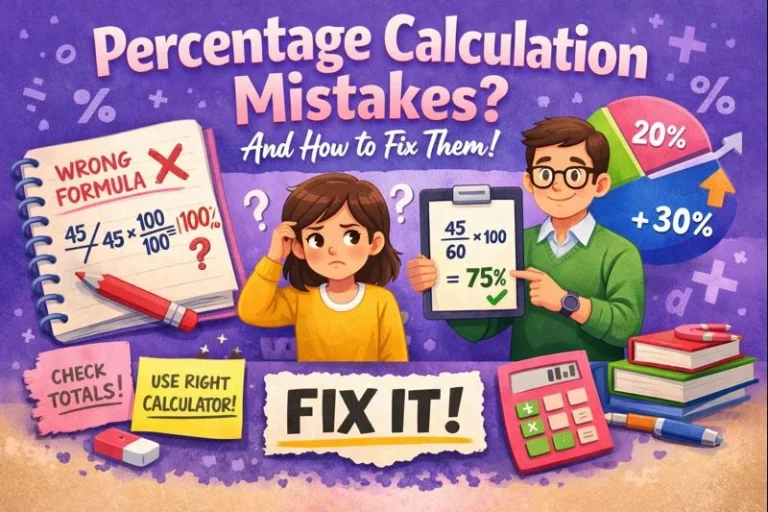
Teachers traditionally calculate grades by counting total questions, subtracting wrong answers, and dividing correct answers by the total. The result is multiplied by 100 to find the percentage score.
After this, the percentage is converted into a letter grade using the school’s grading scale.
Problems With Manual Grade Calculation
Manual grading creates common classroom challenges:
- Takes a lot of time
- Causes inconsistency in rounding
- Increases chances of calculation mistakes
- Requires repeated checking
These problems make grading stressful for teachers and confusing for students. Check the article about Difference between Unweighted vs Weighted GPA .
What Is a Grading Calculator?
A grading calculator is an online tool that automatically calculates scores. Teachers simply enter the total number of questions and wrong answers, and the calculator shows the percentage and letter grade instantly.
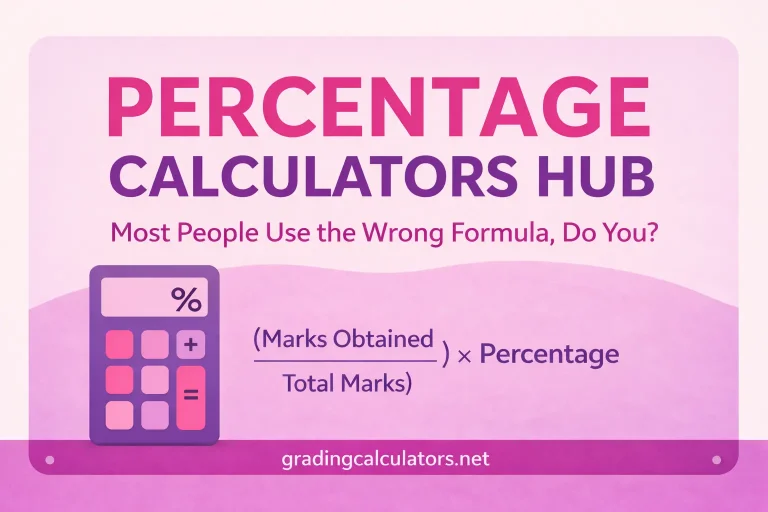
This tool clearly explains how teachers calculate grades without manual math. Many students and teachers have made their work easier by calculating their percentage using percentage calculators hub.
Manual Grading vs Grading Calculator
Manual Grading
- Slow for large classes
- Higher chance of math errors
- Difficult to repeat for many students
Grading Calculator
- Instant results
- Accurate calculations every time
- Consistent grading for all students
How Teachers Calculate Grades Using a Grading Calculator
Teachers follow these simple steps:
- Enter the total number of questions
- Enter the number of wrong answers
- View the percentage score
- Check the letter grade
This process shows how teachers calculate grades quickly and accurately in modern classrooms.
Real Classroom Examples
Here are common grading situations:
Teachers often use a grading calculator to get these results in seconds.
How Teachers Convert Percentages to Letter Grades
Most schools use a standard grading scale:
- 90–100% → A
- 80–89% → B
- 70–79% → C
- 60–69% → D
- Below 60% → F
Grading practices like these align with commonly used academic standards, such as those explained by the College Board.
Who Is This Guide For?
For Teachers
Teachers use grading calculators to save time, reduce grading errors, and apply consistent rules across the entire class.
For Students
Students use grading calculators to understand results clearly and see how wrong answers affect final scores.
For Parents
Parents rely on grading calculators to track academic progress and understand test results without confusion.
Why Teachers Trust Grading Calculators
- Faster grading process
- Accurate calculations
- Clear results for students
- Less stress during exams
Teachers often combine grading calculators with tools like a Final Grade Calculator or Weighted Grade Calculator for complete academic evaluation.
Frequently Asked Questions
Conclusion
Understanding how teachers calculate grades removes confusion and builds trust between teachers, students, and parents. Manual grading may work, but it often causes stress and takes unnecessary time.
Using a grading calculator offers a faster, more accurate solution. It ensures fair grading, saves time, and makes results easier to explain—making it the smarter choice for modern classrooms.