Percentage Calculation Mistakes (And How to Fix Them)
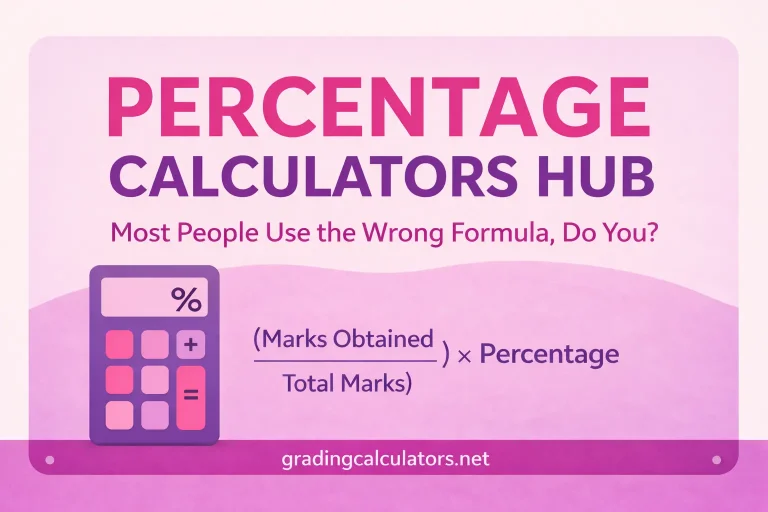
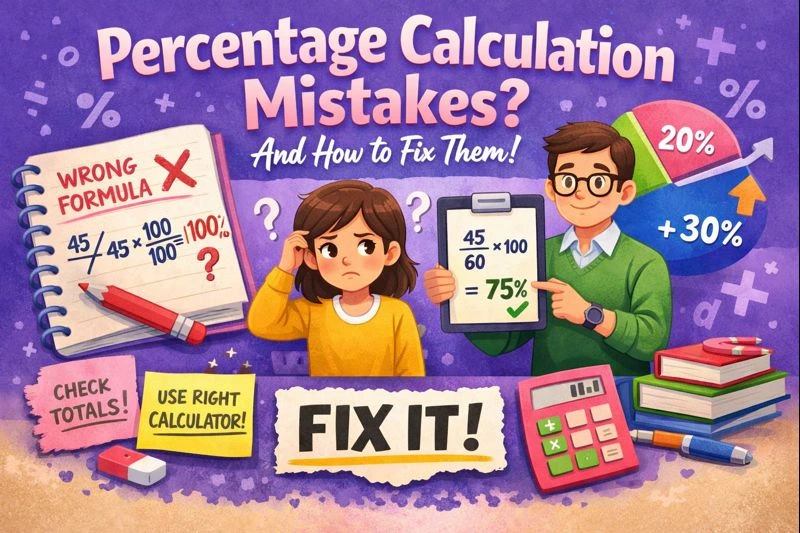
Percentage questions look simple, but many students still lose marks because of small mistakes. This often happens during exams, homework, or when checking results online. One wrong step can change the final score and create confusion.
Most people think the issue is weak math skills. In reality, it is usually a wrong total, a mixed-up formula, or choosing the wrong calculator option. We see this often when users check answers using a percentage calculator. The tool works correctly, but the input does not.
This guide explains common percentage calculation mistakes and how to fix them. Each example is based on real grading patterns and common calculator errors, so you can calculate percentages with more confidence and accuracy.
You can calculate percentages with more confidence and accuracy.

Percentage Calculation Mistakes
Percentages depend on three things: the part, the total, and the type of calculation. If any one of these is wrong, the answer becomes wrong, leading to common percentage calculation mistakes. Rushing during exams, skipping steps, or guessing formulas increases errors, which is why these mistakes happen even among students who understand basic math.
Read other blog also: What Do Credit Hours Mean and Why Do They Matter?
Mistakes by User Type
Student Mistakes
School students often rush during exams and tests.
Common mistakes include:
Example
College Student Mistakes
College students rely more on calculators.
Common percentage calculation mistakes include:
Example
A value increases from 100 to 120.
The correct base value is 100, not 120.
Teacher Mistakes
Teachers often calculate results in bulk.
Common percentage calculation mistakes include:
These mistakes usually happen due to time pressure.
Parent Mistakes
Parents calculate percentages to verify results.
Common percentage calculation mistakes include:
This leads to confusion, not incorrect math.
Calculator Mistakes
Online calculators are accurate, but they depend on correct input.
Common calculator mistakes include:
Wrong input always gives the wrong result. To avoid this, always use the correct percentage calculator for your problem.
Choosing the Right Calculator
The percentage calculator includes different tools for different needs:
Using the wrong option is one of the biggest causes of wrong answers.
Example
To find 20% of 150, use “What is X% of Y.”
To find 45 is what percent of 150, use “X is what percent of Y.”
Mixing these two gives incorrect results.
Mistakes Summary
| Mistake | What Goes Wrong | Correct Practice |
|---|---|---|
| Wrong total value | Percentage becomes incorrect | Always divide by total marks |
| Forgetting ×100 | Decimal written as percentage | Multiply by 100 at the end |
| Early rounding | Final answer changes | Round only at the last step |
| Wrong calculator type | Incorrect result | Match calculator to problem |
| Increase vs simple % | Wrong base value | Divide by original value |
How to Avoid Errors
Follow these steps every time:
These steps prevent most percentage mistakes.
When Not to Use Percentage
Percentage should not be used for:
In these cases, use a Weighted Grade Calculator or GPA tool instead.
Why Accuracy Matters
Schools commonly use percentage-based grading to convert marks into scores. These calculations follow the same formulas taught in classrooms and used by educators.
For official guidance on grading and assessment practices, refer to the
U.S. Department of Education:
The same percentage rules also apply to discounts, price changes, and everyday comparisons.
Conclusion
Over time, we have seen how small percentage mistakes affect real grades. Students lose marks, teachers face questions, and parents feel unsure about results. In most cases, the math itself is not wrong. The mistake comes from rushing or using the wrong method.
From grading exams to checking homework, accuracy matters. Clear steps, correct totals, and the right calculator option make a real difference. This guide is based on real grading patterns and common user mistakes, not theory.
When you slow down and choose the correct percentage calculator, percentages become easier to manage. The results feel clear, fair, and reliable every time.