Unweighted vs Weighted GPA: How to Calculate Both (Student Guide)
Confused About Your GPA Numbers?
Many students feel worried when they see more than one GPA number on their report card. One GPA may look lower than expected, while another looks higher, which can be confusing. This usually happens because students are not clearly taught how GPA systems work or how grades are calculated, especially when comparing unweighted vs weighted GPA.
This confusion can lead to real problems. Students may avoid advanced classes, misunderstand their academic progress, or feel unnecessary stress during college planning. Parents and students often rely only on numbers without knowing what those numbers actually represent.
To solve this, it is important to understand how GPA is calculated and what each GPA type shows. Tools like All GPA Calculator, CGPA calculators, and weighted grade calculator can help you check your scores accurately. However, calculators work best when you understand the meaning behind the results. This guide explains everything clearly so you can make confident academic decisions without confusion.
Who This Guide Is For
This unweighted vs weighted GPA guide is written for middle and high school students who want to understand how GPA works. It is also helpful for parents who want to explain report cards clearly and support their children in academic planning.
College-bound students and international students learning the U.S. grading system can also use this guide to understand how grades are measured and reviewed.

What Is an Unweighted GPA?
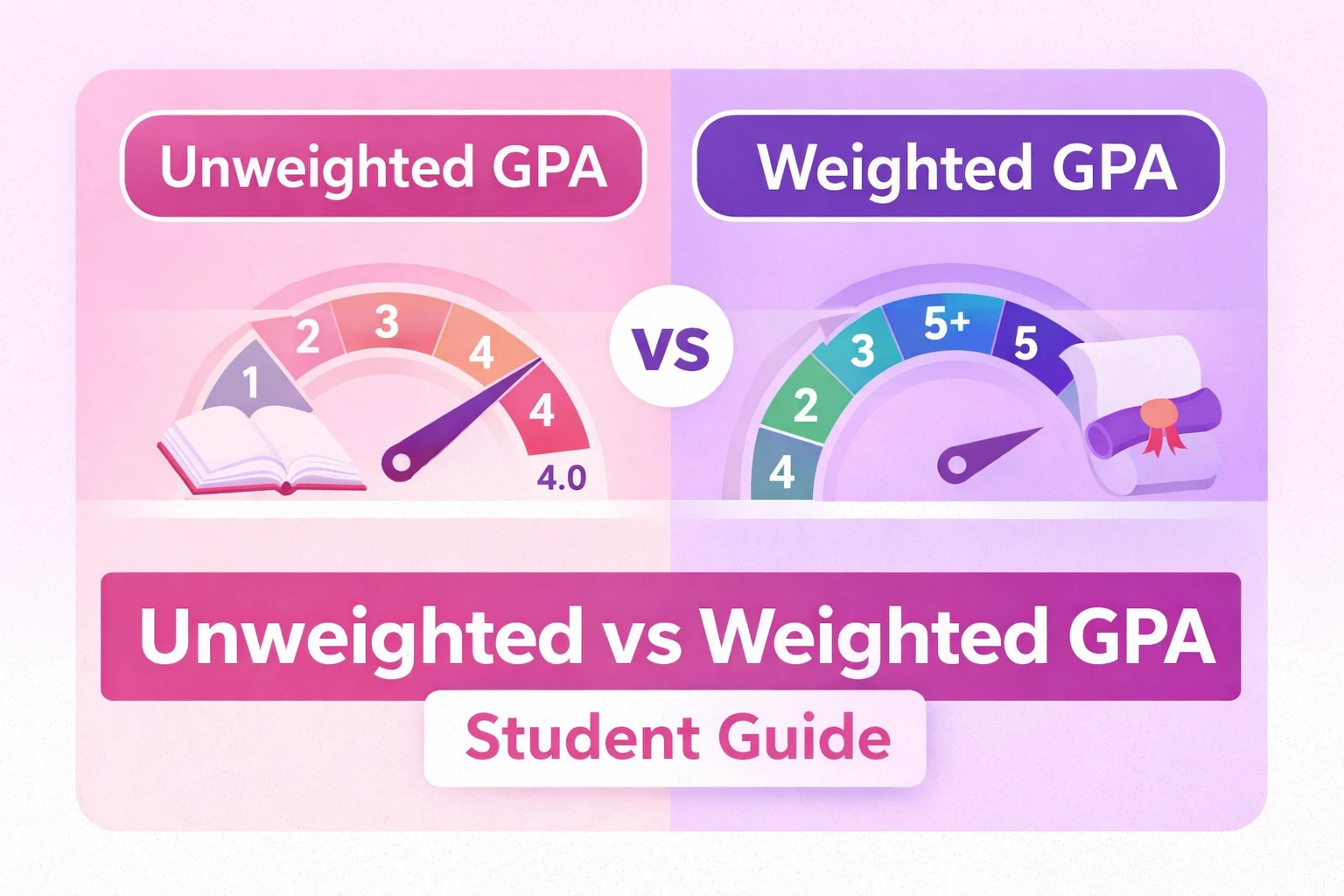
An unweighted GPA uses a 4.0 scale and treats all classes the same. It does not matter if the class is easy or difficult — the grade value stays the same.
Typical unweighted GPA scale:
An A earned in a regular class and an A earned in an advanced class both count as 4.0.
How to Calculate an Unweighted GPA
To calculate an unweighted GPA:
1. Convert each letter grade into grade points
2. Add all grade points together
3. Divide by the total number of classes
If you want to double-check your math, you can use an online GPA calculator to confirm your unweighted result.
What Is a Weighted GPA?
A weighted GPA gives extra points for more difficult classes. These usually include Honors, AP (Advanced Placement), and IB (International Baccalaureate) courses.
Because of bonus points, weighted GPAs can be higher than 4.0. Many schools use this system to reward students who take challenging classes.
How to Calculate a Weighted GPA
The steps are similar to unweighted GPA, but bonus points are added first:
Convert grades into base points
1. Add bonus points for advanced classes
2. Add all points together
3. Divide by the total number of classes
Example:
If your classes use different credit values or category weights, a weighted grade calculator can make this process easier.
This example clearly shows how unweighted vs weighted GPA can lead to different results.
Unweighted vs Weighted GPA: Key Differences
Comparison of GPA scales and course difficulty
| Feature | Unweighted GPA | Weighted GPA |
|---|---|---|
| Maximum score | 4.0 | 5.0 or higher |
| Course difficulty counted | No | Yes |
| Can exceed 4.0 | No | Yes |
| Shows academic challenge | No | Yes |
In simple terms, unweighted vs weighted GPA compares grades alone versus grades plus course difficulty.
When one GPA type looks stronger than the other
Unweighted GPA shows grades only, while weighted GPA shows grades plus course difficulty. This difference helps schools understand effort and challenge.
How Schools and Colleges Review GPA
Colleges do not judge students by GPA alone. Admissions teams carefully review the full academic transcript, including grades, course levels, and consistency over time.
Many colleges also recalculate GPA using their own rules, often focusing on core subjects like math, science, and English. In these cases, students may look at their overall progress using a cumulative GPA calculator to understand long-term performance.
Because of this process, unweighted vs weighted GPA is always reviewed with context, not just as a number.
Which GPA Matters More for College Applications?
Neither GPA is better by itself. Colleges care about both performance and effort. A student with strong grades in advanced classes may be seen as more prepared than a student with perfect grades in only easy classes.
Students should always report GPA exactly as it appears on their official transcript and follow the instructions given on college applications.
Can Weighted GPA Be Converted to Unweighted?
There is no exact formula to convert weighted GPA to unweighted GPA because schools use different bonus systems. However, an estimate is possible.
For example, a weighted GPA of 4.4 may equal an unweighted GPA between 3.6 and 3.8, depending on how many advanced classes were taken. To test different scenarios, students often use a high school GPA calculator for comparison.
This comparison helps students better understand unweighted vs weighted GPA results.
Frequently Asked Questions About GPA (weighted-unweighted)
Final Thoughts
Understanding how GPA is calculated helps students see their academic performance more clearly. When students know how schools use grades and course levels, they can read report cards with confidence and make better choices about future classes. This knowledge also helps parents and students understand how colleges review academic records, which builds trust and reduces unnecessary worry.
Academic success is not based on numbers alone. Taking responsibility for learning, choosing courses that match your ability, and showing steady improvement over time all matter. When students focus on effort, consistency, and learning skills, strong results usually follow naturally — both in the classroom and on their GPA.